What’s the best way to practice speaking without memorizing a script?
What’s the best way to practice speaking without memorizing a script?
Jan 13, 2026
You rehearse. You know your stuff.
Then you open your mouth, and it doesn't land like you want it to.
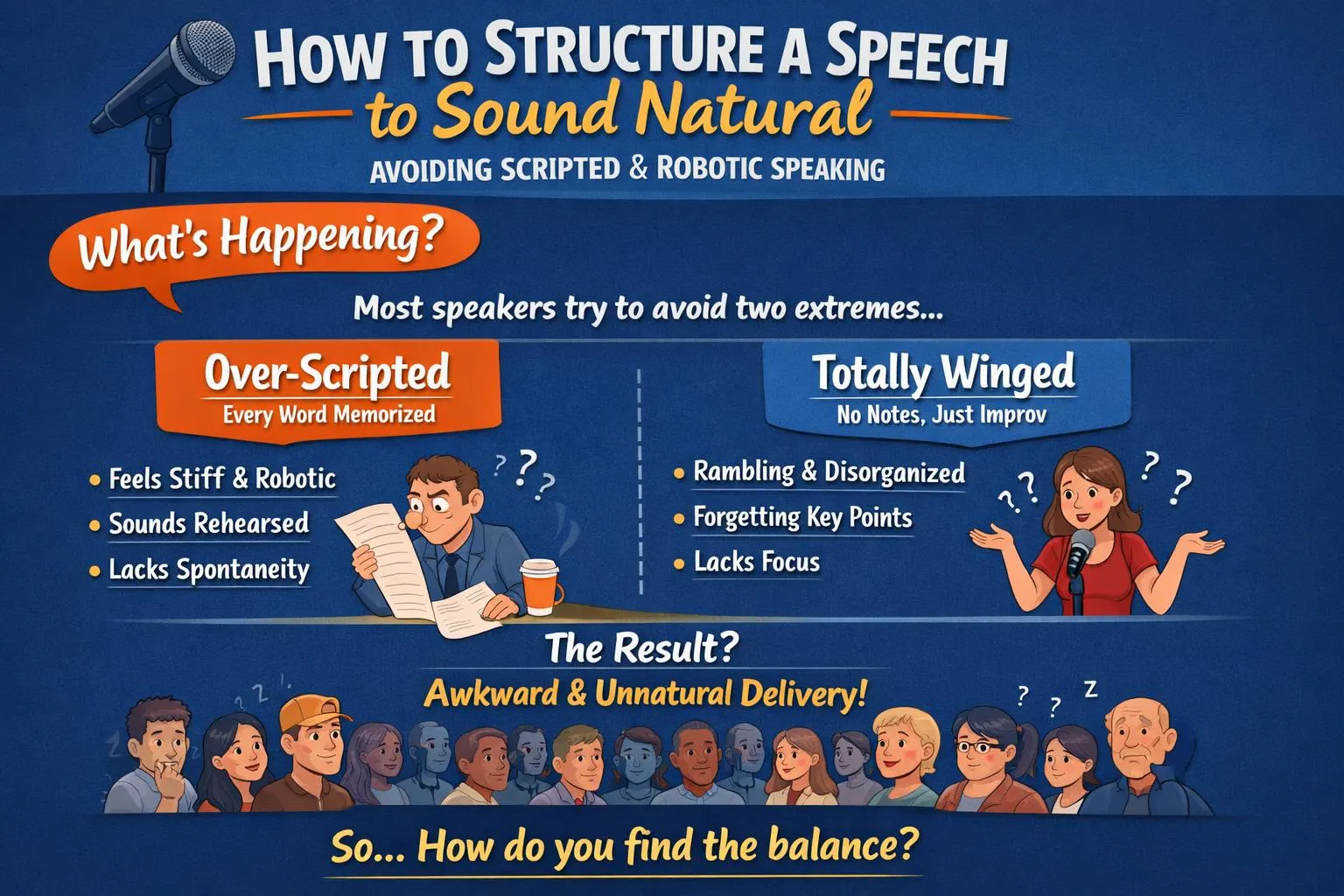
Because you prepared in a way that doesn’t match real speaking.
What’s actually happening
Speaking under pressure is a working-memory task.
When you memorize a script, you’re asking your brain to:
- recall exact wording,
- monitor how you sound,
- track the audience,
- manage time,
- and keep the message coherent…
…all at once.
That’s a high cognitive load stack. Working memory is limited, and stress makes it worse. (Baddeley’s working memory model is the cleanest way to explain this.)
Under social evaluation - meeting, presentation, camera - your system protects itself by dropping “nonessential” processes. Unfortunately, the first thing to go is often word-perfect recall.
The common misdiagnosis
People assume:
“I’m not confident.”
“I’m just not a natural speaker.”
“I need more reps.”
No. You need different reps.
You’re practicing recall. But the real skill is construction: building clear sentences in real time from a stable structure.
The reframe
Speaking is thinking that is expressed out loud.
So the best practice isn’t memorizing lines.
It’s rehearsing the sequence of ideas so your brain can generate natural language on demand, like it does in normal conversation, just with better structure.
The exercise
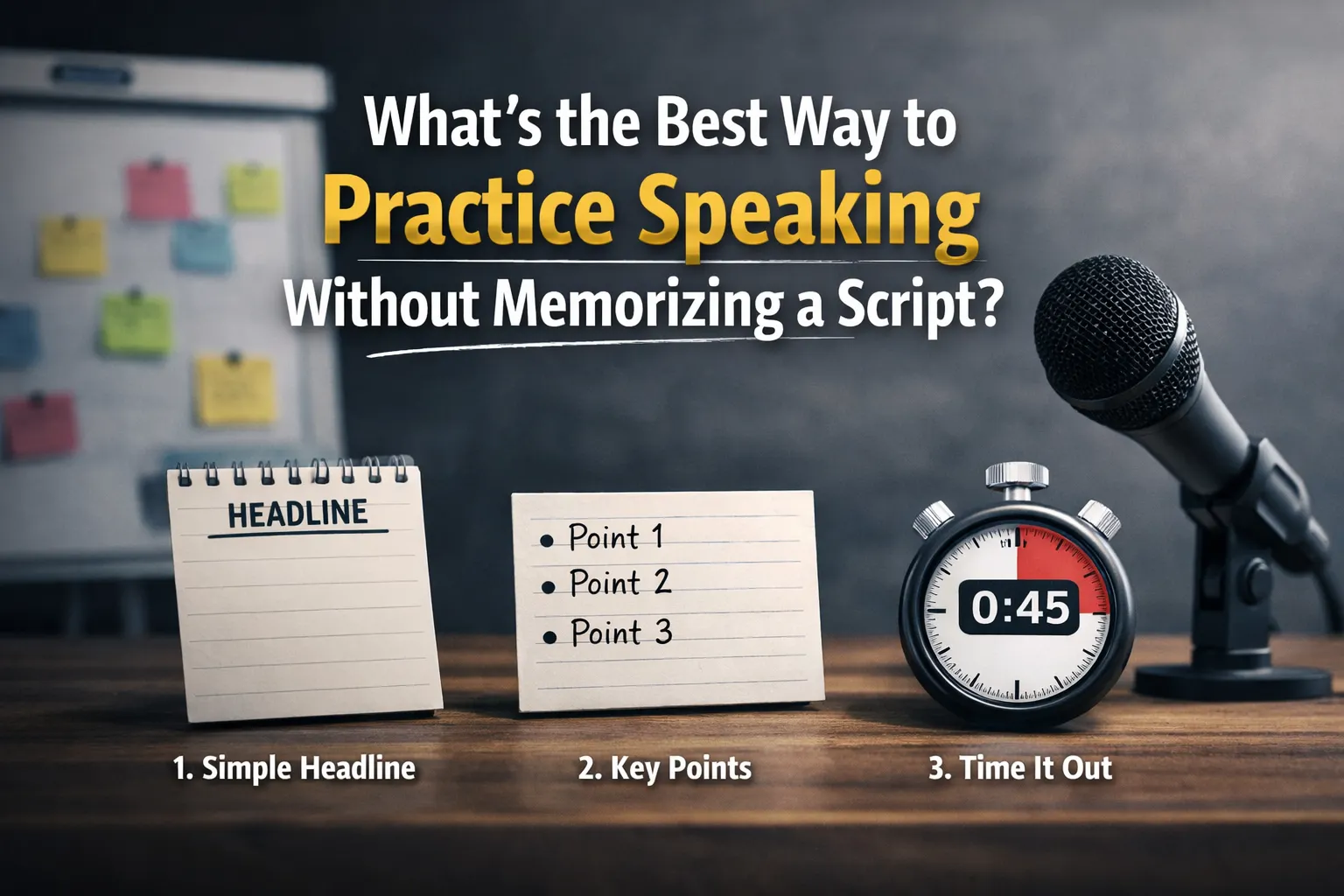
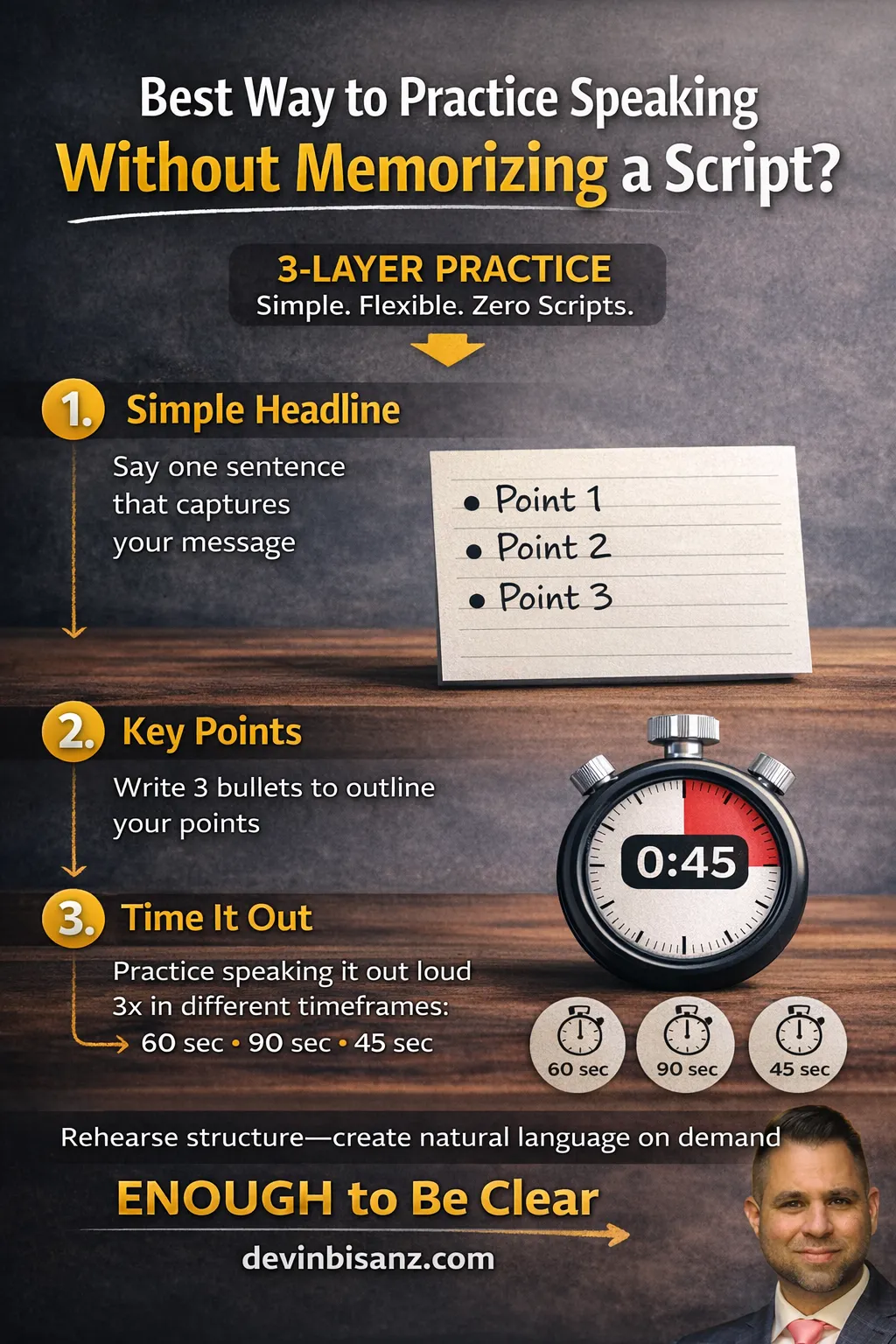
The 3-Layer Practice (7 minutes, no script)
Layer 1: Say the “headline”
In one sentence, say what you want them to understand.
Not clever. Not complete. Just true.
Example:
“Here’s the decision I’m recommending, and why.”
Layer 2: Build a 3-point spine
Write 3 bullets only. No paragraphs.
Point 1: reason / context
Point 2: evidence / example
Point 3: implication / next step
Layer 3: Speak it 3 times
Run it three times, each time with a different constraint:
Version A: 60 seconds (tight)
Version B: 90 seconds (normal)
Version C: 45 seconds (pressure test)
Rules:
You may glance at the 3 bullets.
You may not write full sentences.
If you blank, you don’t restart. You jump to the next bullet.
What you’re training:
retrieval of structure (low load),
real-time phrasing (natural),
recovery under pressure (leadership skill).
The broader implication for leadership, trust, and influence
Leaders aren’t trusted because they sound polished.
They’re trusted because they sound clear.
Memorization makes you brittle.
Structure makes you adaptable.
And adaptability is what your team reads as competence when stakes are high.
— Devin Bisanz
Related posts:
Why do I sound clear in my head but messy when I speak?
Why does speaking feel harder as my role gets bigger?
How do I organize my thoughts quickly before I speak?
Check Out Our Brand New Mini-course:
https://devinbisanz.com/speak-with-clarity